
Aligning Community Design with User Reality
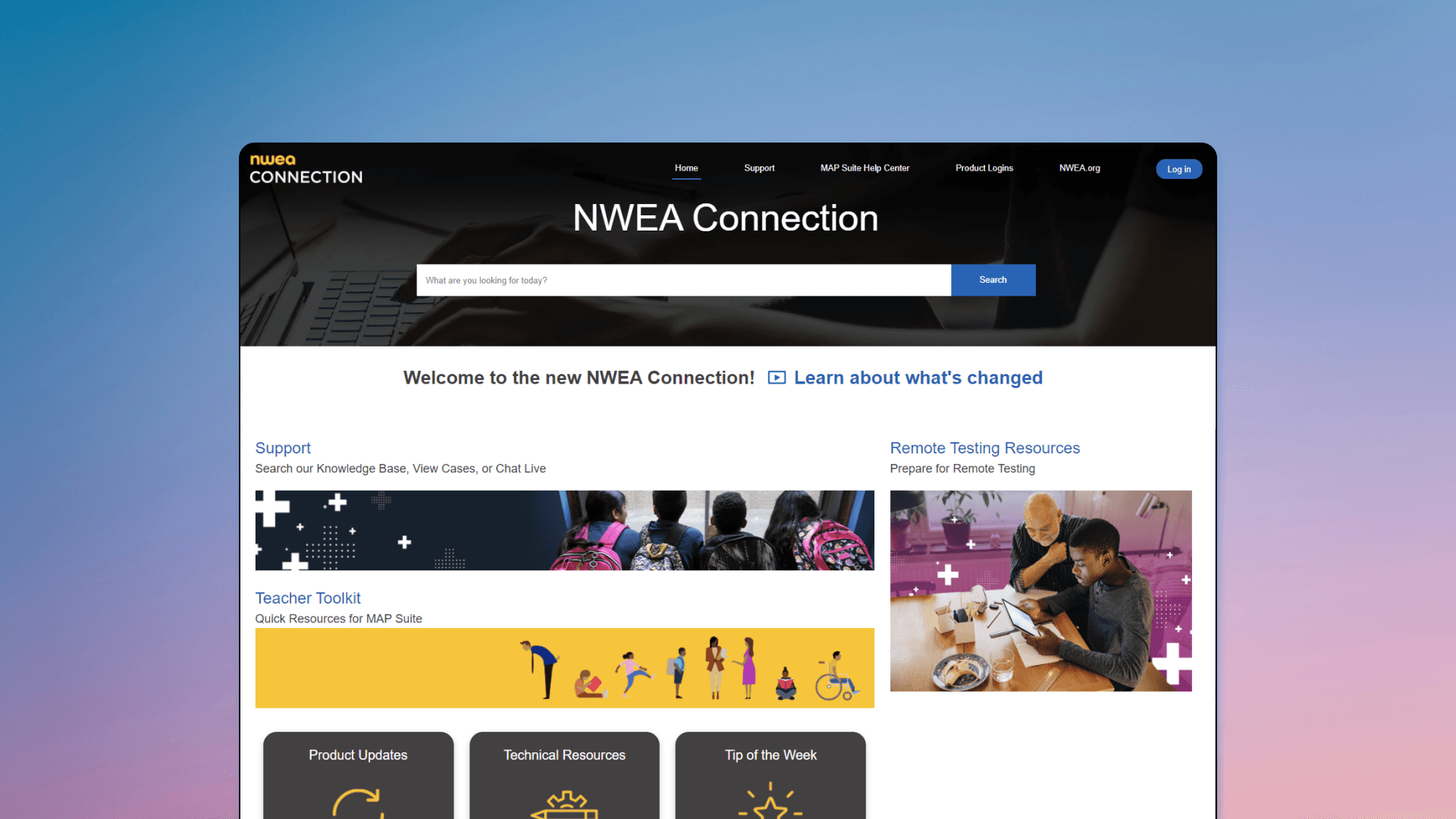
NWEA Connection is a community site for educators to interact with each other and learn about upcoming updates to NWEA’s assessment products. The site was migrating platforms from Jive to Salesforce. This UX redesign was a part of that migration.

Portland, Oregon
1973
Education Technology
$235.8 Million (2019)
1,000+
Challenge
The community site was built for teachers over the course of years, with no hollistic vision of where it was headed. It was a frankenstein of features that all worked, but clouded what the community was for. And that is where the project started.
Goal
NWEA wanted this community to grow. More educators participating on this platform meant NWEA connection becomes a more reliable channel to share knowledge and prepare educators for upcoming updates.
By providing a place to share expertise and knowledge on how to use NWEA’s assessment products, this was a chance to ease the strain on the support team, who typically served as a source of truth to educators who get stuck or confused while usinng these products.


Outcome & Strategic Impact
6 months after launch, the signals have demonstrated:
Educators find answers faster through improved search and structure
Internal support teams report clearer customer pathways to resolutions
User engagement is shaped around outcomes (support + product updates) instead of open-ended discussion
Most importantly, the research phase fundamentally altered how the organization defines community value, creating alignment between user behavior, product goals, and business outcomes.
24%⇈
New Memberships month over month
32%⇊
Support calls related to updates
Process
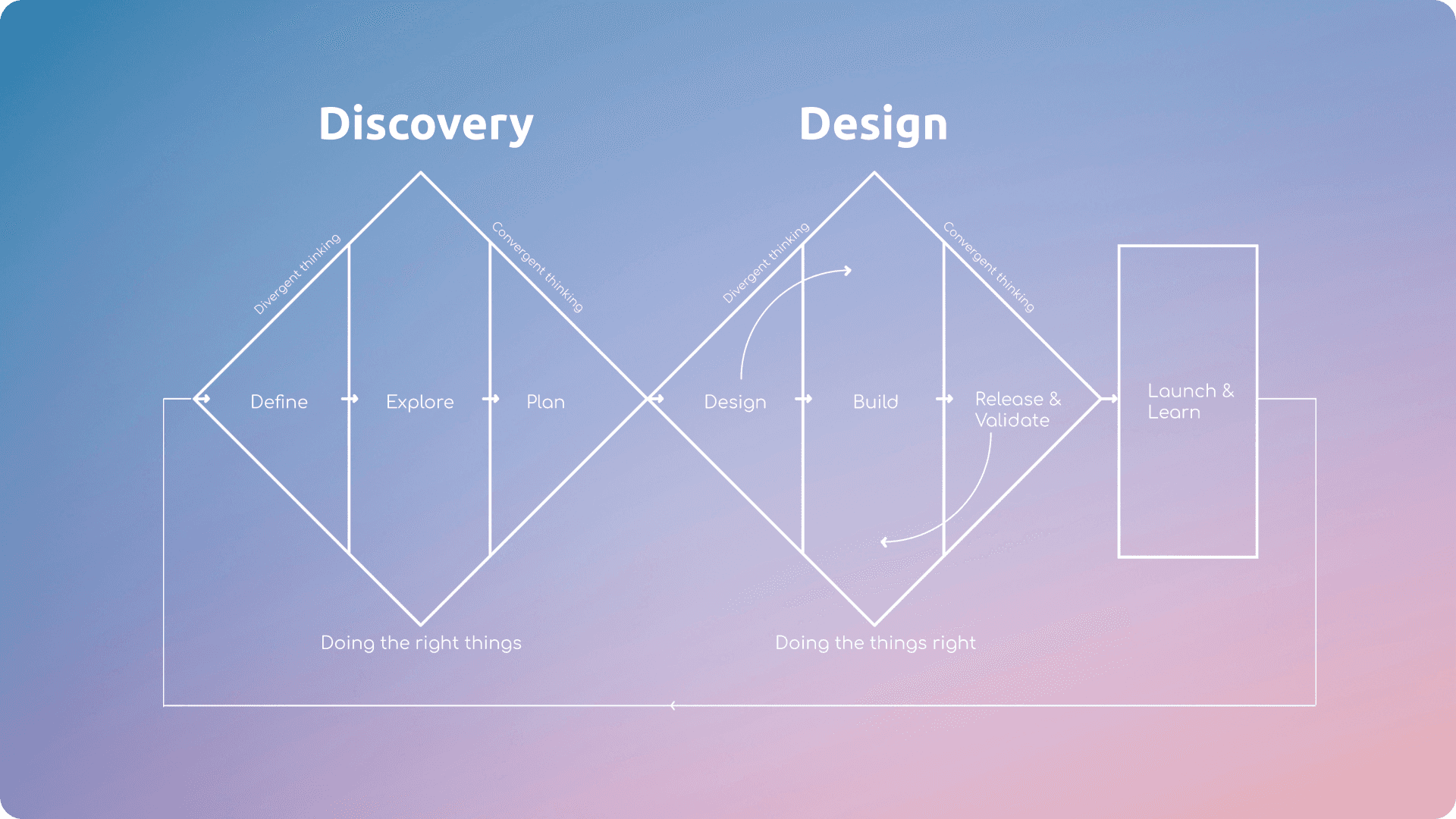
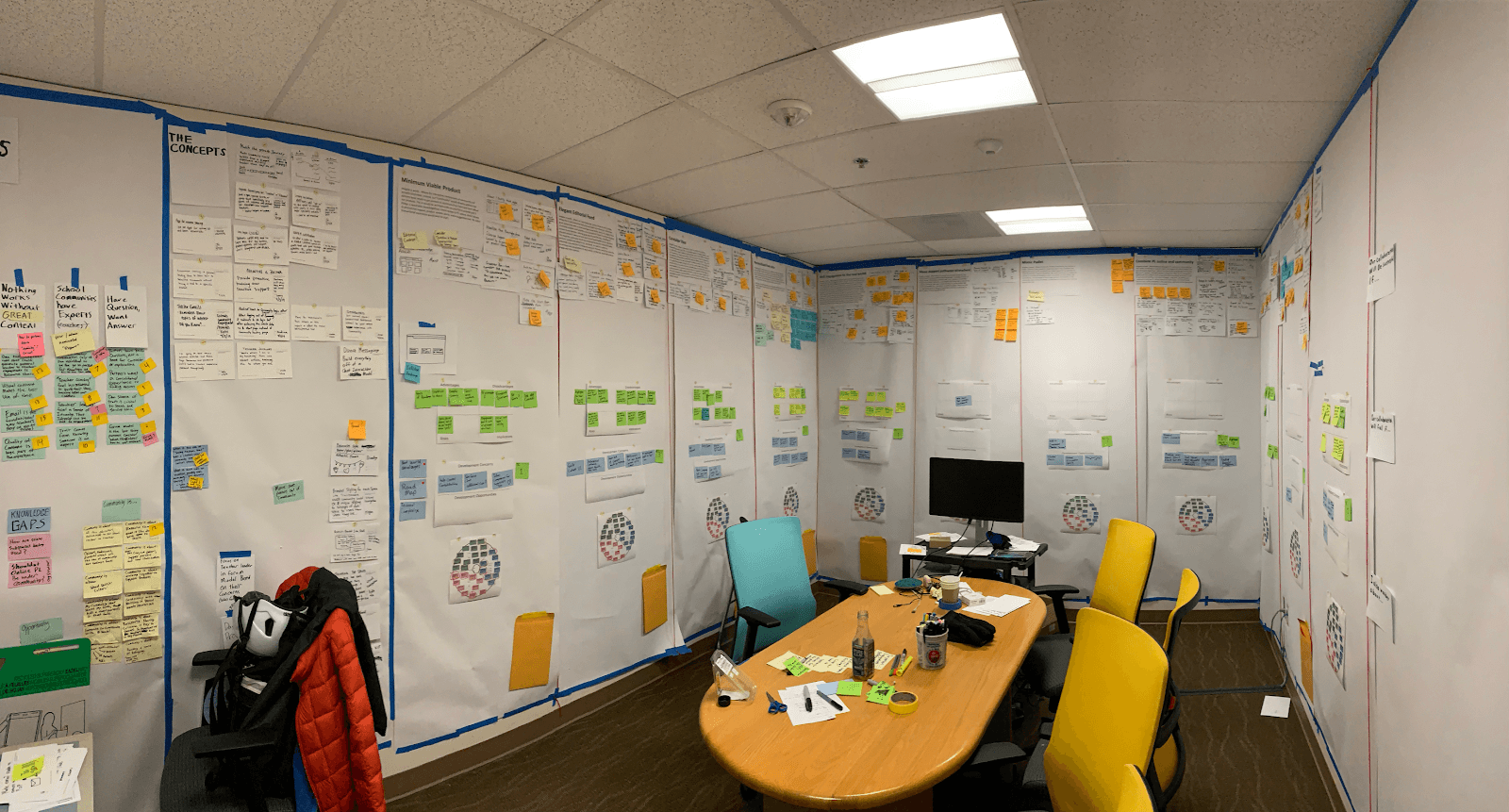
This project had a year of runway until the migration deadline. Given the large scope and time alloted to this work, the team proceed to plan out an in-depth roadmap to research and design through a double diamond process.
Defining scope
We drafted 3 personas to represent various sections of our userbase: Teachers! We identified and critiqued various UI and functionality shortcomings by walking our personas through various user journeys. We used these findings to guide the workshops with real users and stakeholders.
Want to see more about what that looked like? I'm happy to chat, you can reach me at: hey@vinucasper.com
Discovery research
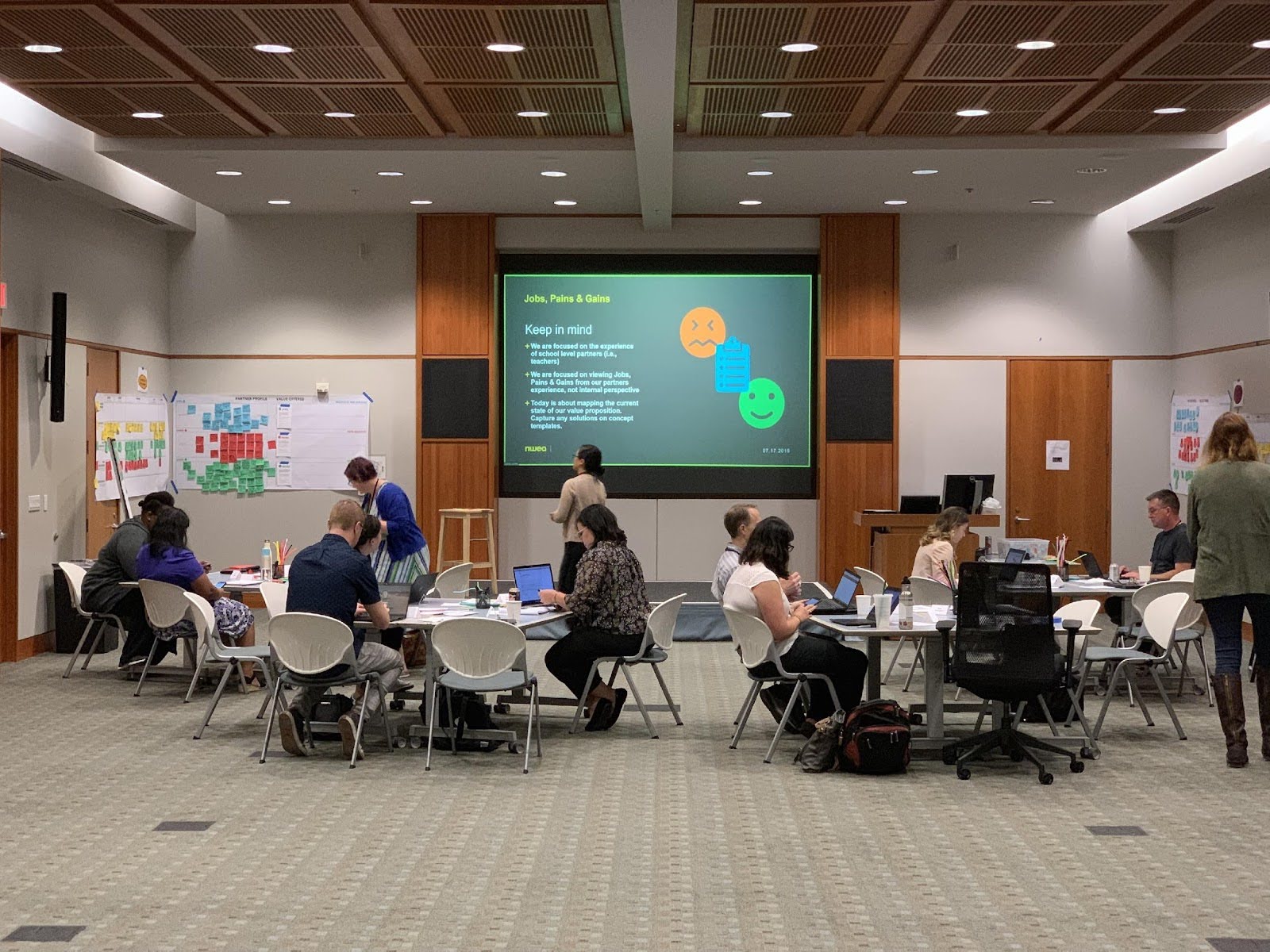
So we got everyone in a room to talk to them, and go through a few activities to understand what we were actually here to do.
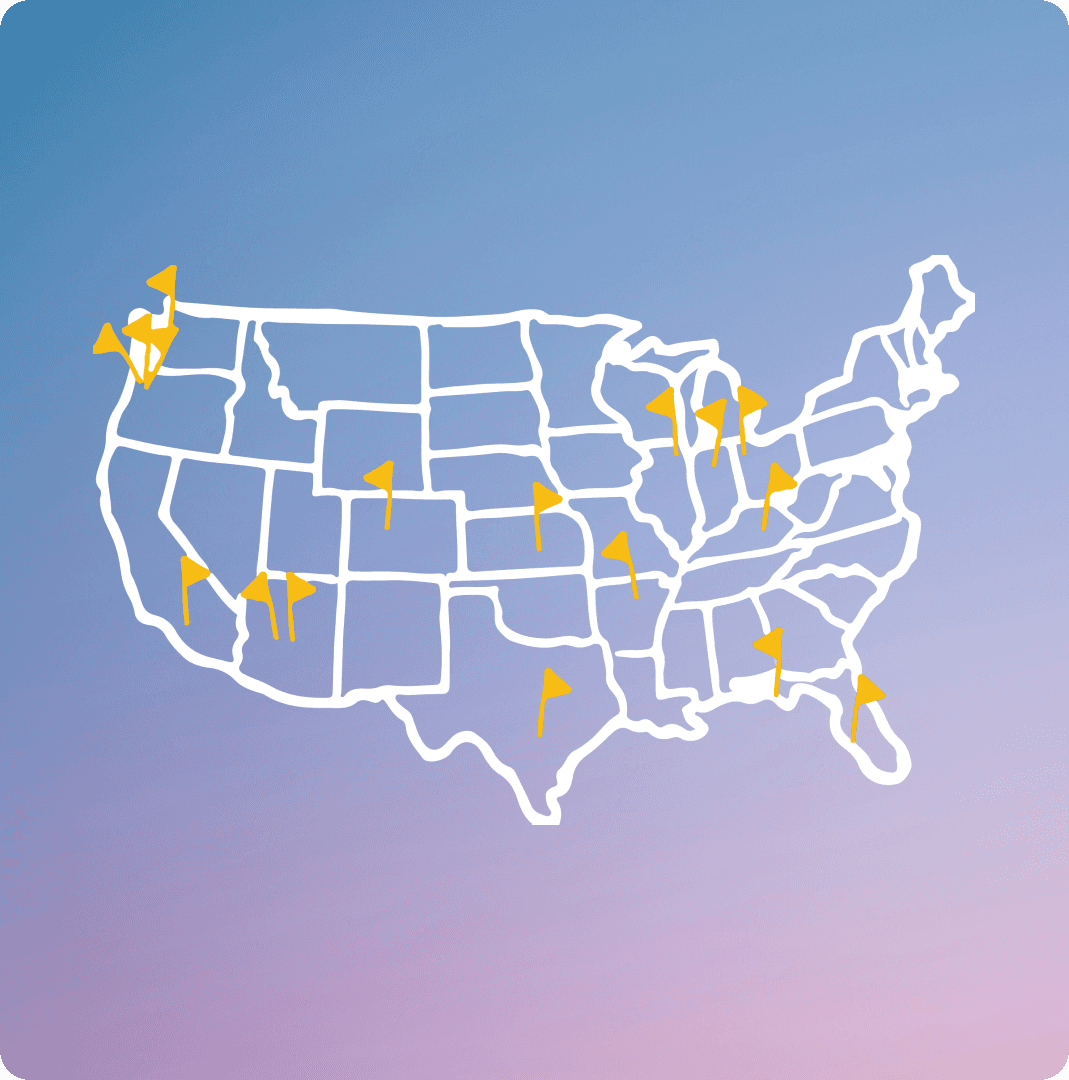
17 Participants:
8 teachers
4 coordinators
2 principals
2 Instructional Interventionist
1 Technical Integration Specialist
We wanted to learn about:
• Attitudes towards community generally
• Experiences with online communities
• Professional growth and learning patterns
• Experiences with product support
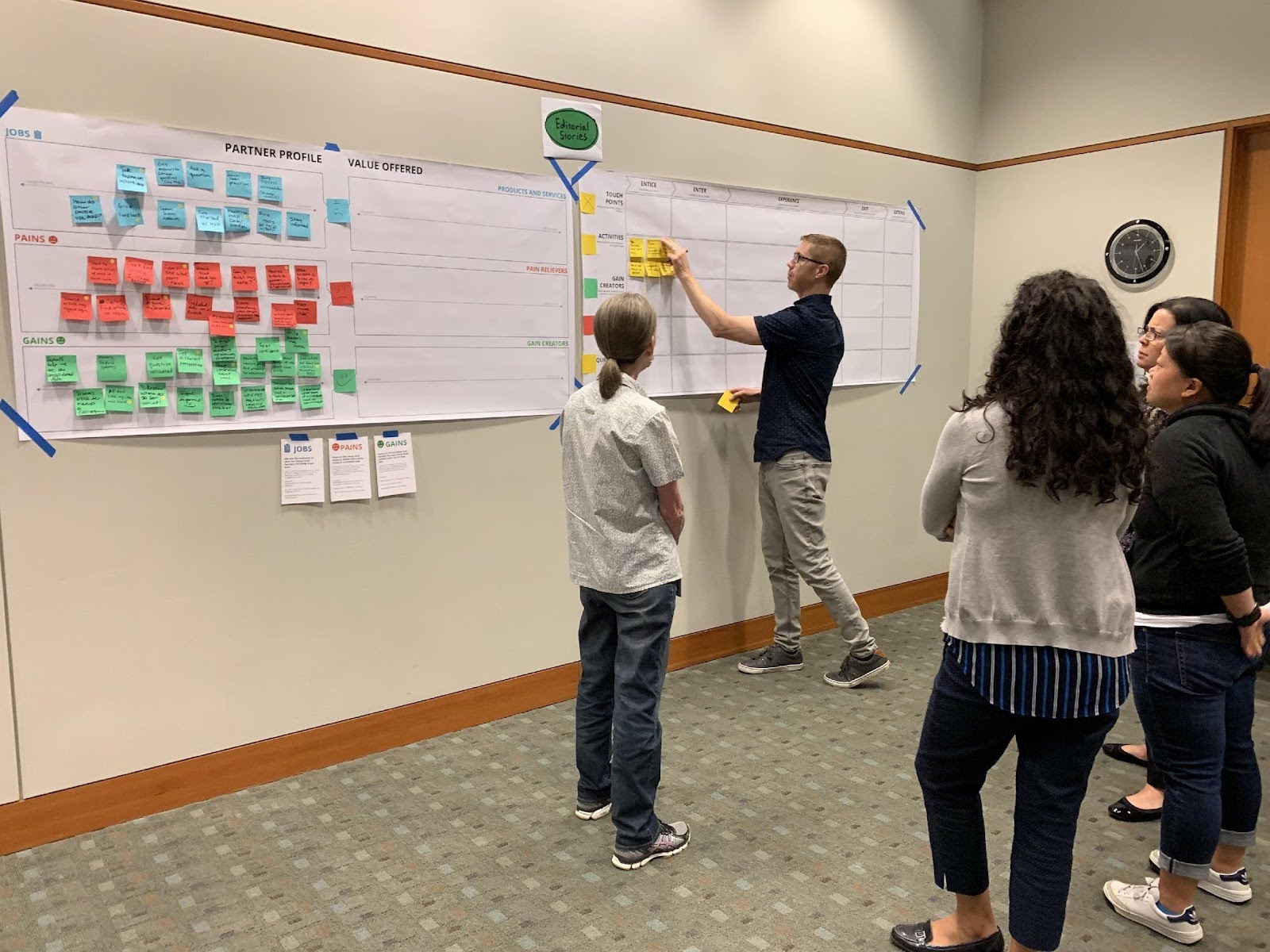
we asked them:
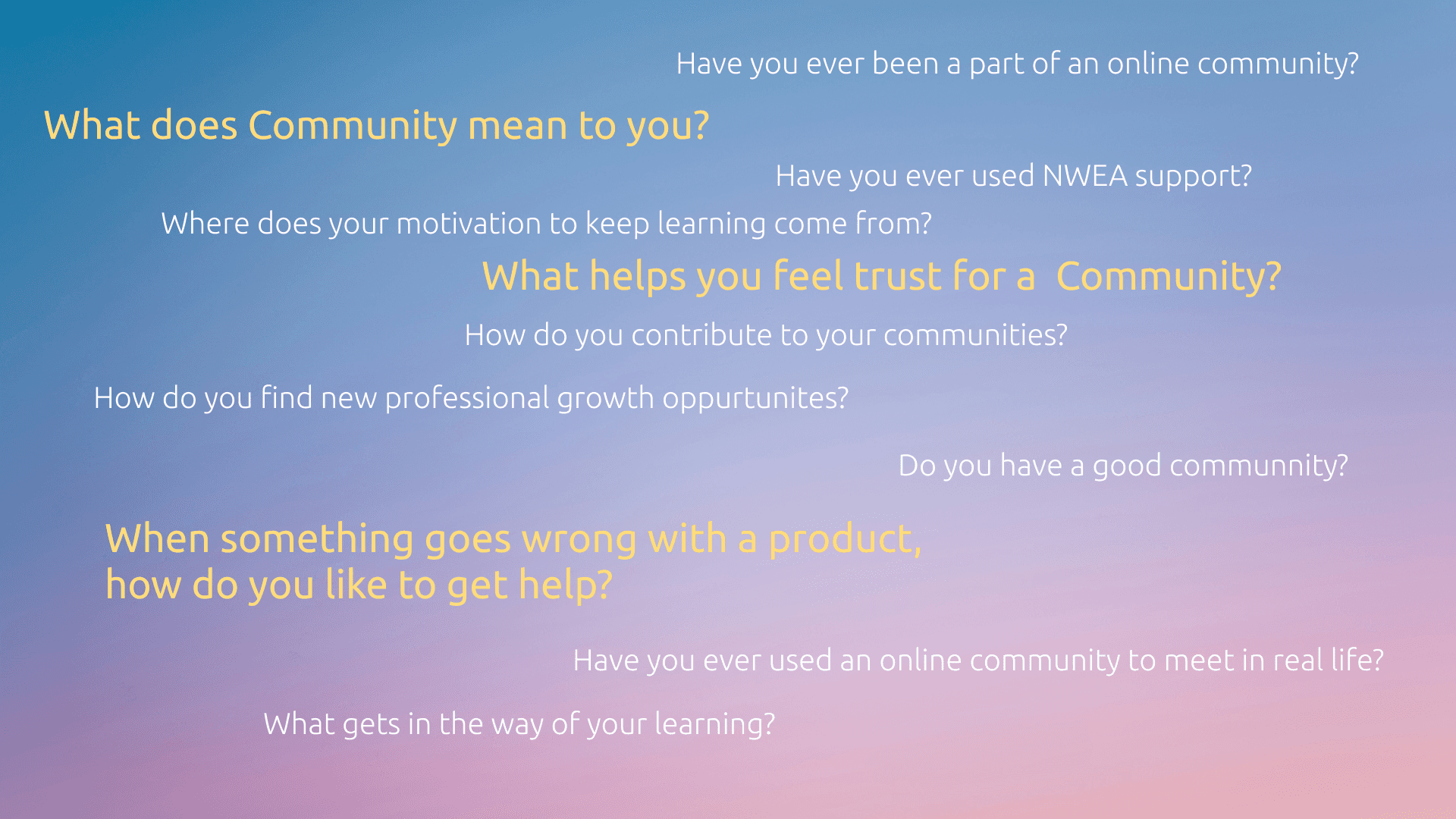
What we were learning
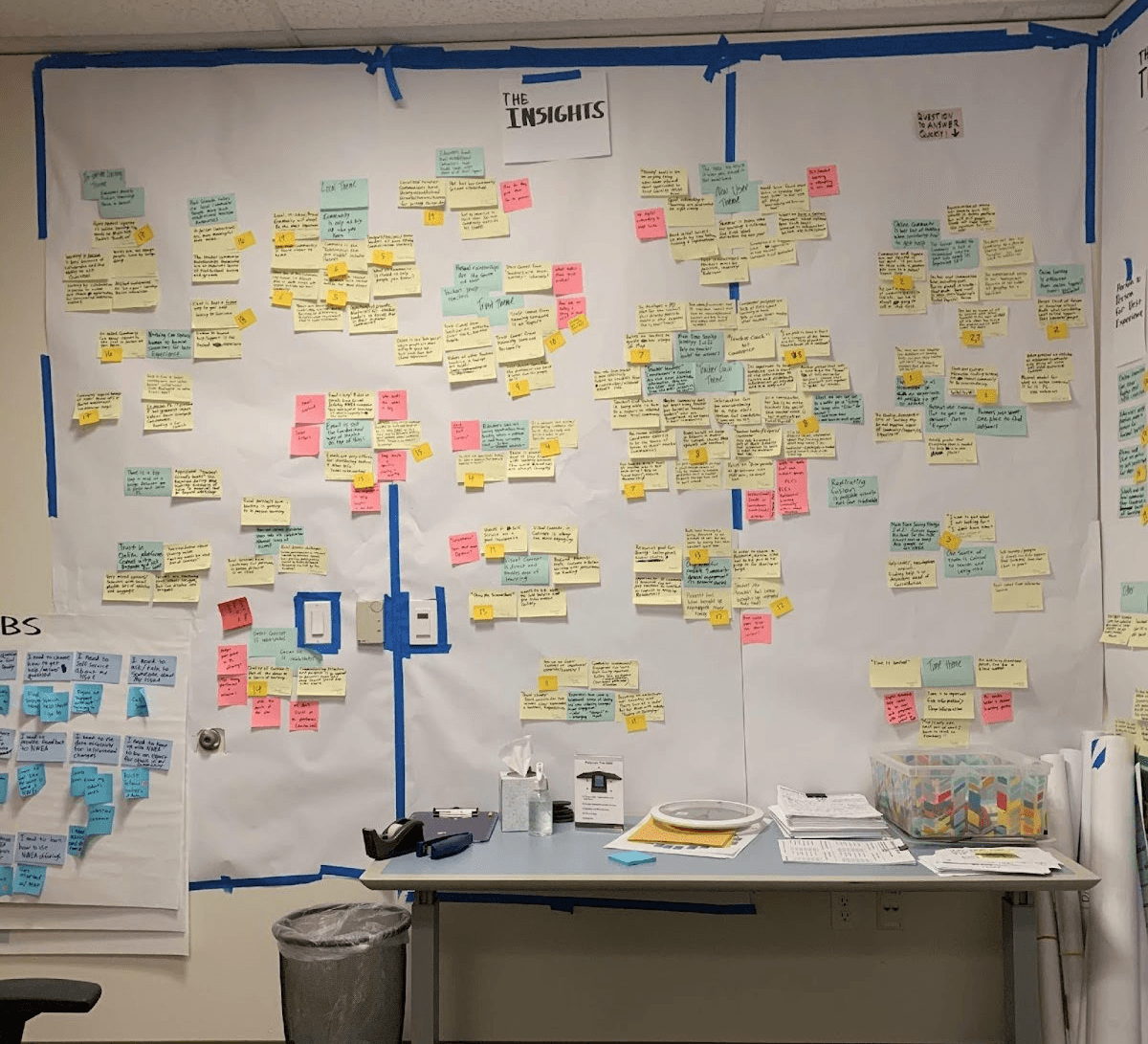
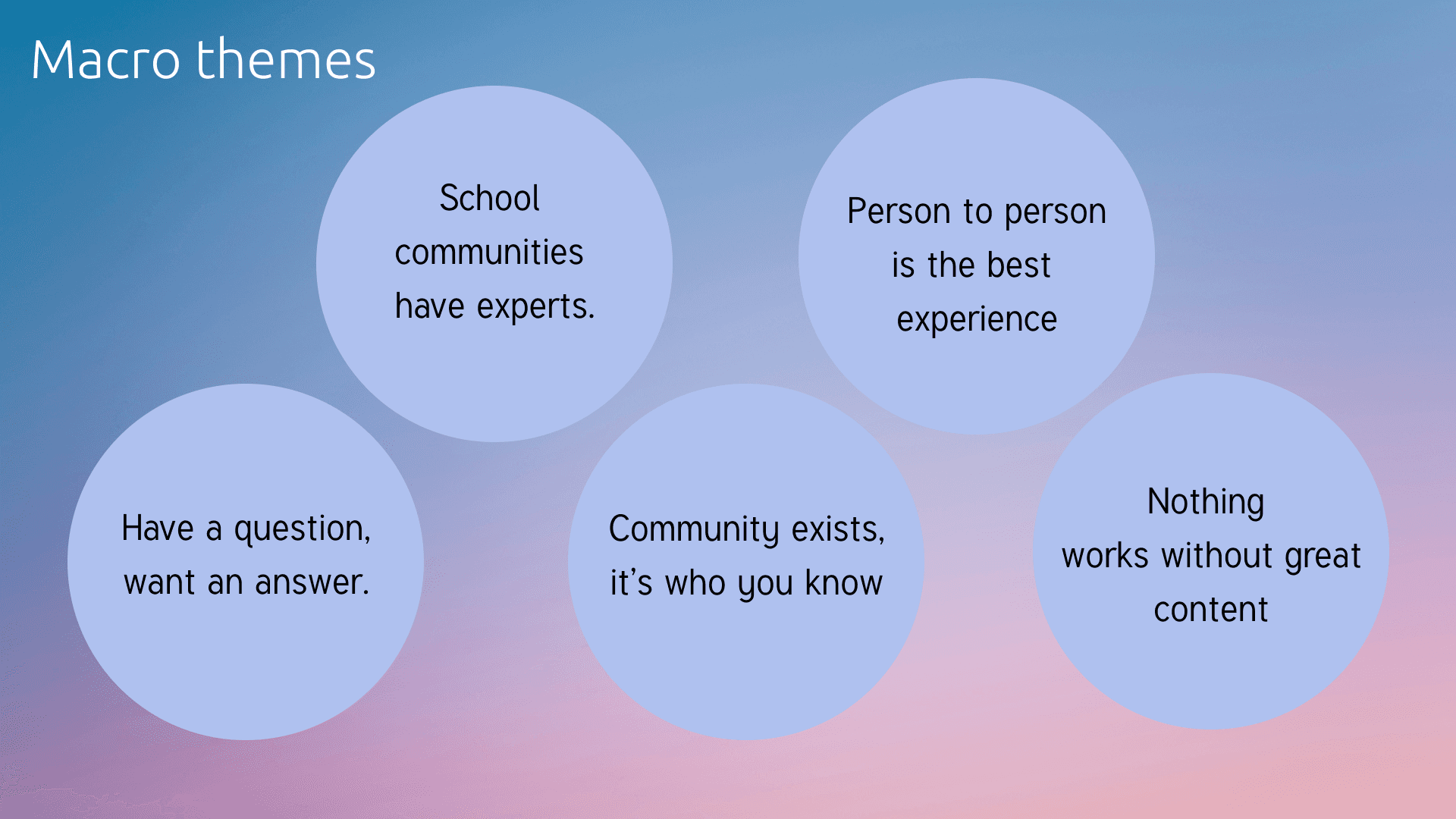
We collected everything we were hearing from the workshop and started to group our findings into various groups. This affinitization revealed several insights that began to emerge under these themes:
Responses and Insights
Here are some of the responses and the insights they correspond to:
Have a question, want an answer
Responses
• Teachers are specifically looking to solve problems, “Not generally wanting to learn.”
• “I want to get to what I was looking for. I don’t have time”
• Browsing our community, Rachel expressed how she found it to be an overwhelming way to find information.
• I had to press Steve to consider support communities as an option, he expressed that he would never consider that as a way to find support. “for a solution to a problem, I do sometimes google.”
Insights
• Users have specific questions, not a need for
curiosity or exploration.
• Users want a streamlined experience to finding answers.
• A consolidated source of truth is critical to SEO, and to saving our users’ time.
• The community forum interaction style is the last thing users consider when they think about how to get answers.
School communities have experts
Responses
• Amber, 2nd grade teacher, relied on leaders in her community to guide her usage of our assessment products.
• As a coordinator, Rachel’s job is to make a teacher’s life easier. Saving teachers time is her motivation. She makes sure to stay on top of product updates.
• Tory was a brand ambassador for a sportswear brand. This gave her a sense of leadership and importance. It was a part of her identity. She was proud to be
evangelizing her brand.
• Penny expressed that for her, knowing that someone else was an expert in a topic gave her trust in their advise.
Insights
• Most all teacher communities rely on one individual
to be the go to source and curator of knowledge on how to use our offerings.
• Leaders feel incentivized to spend their time learning from our content.
• Leaders feel a sense of identity from their expertise. That identity can be tied to engagement.
• Trust comes from knowing someone who is an expert.
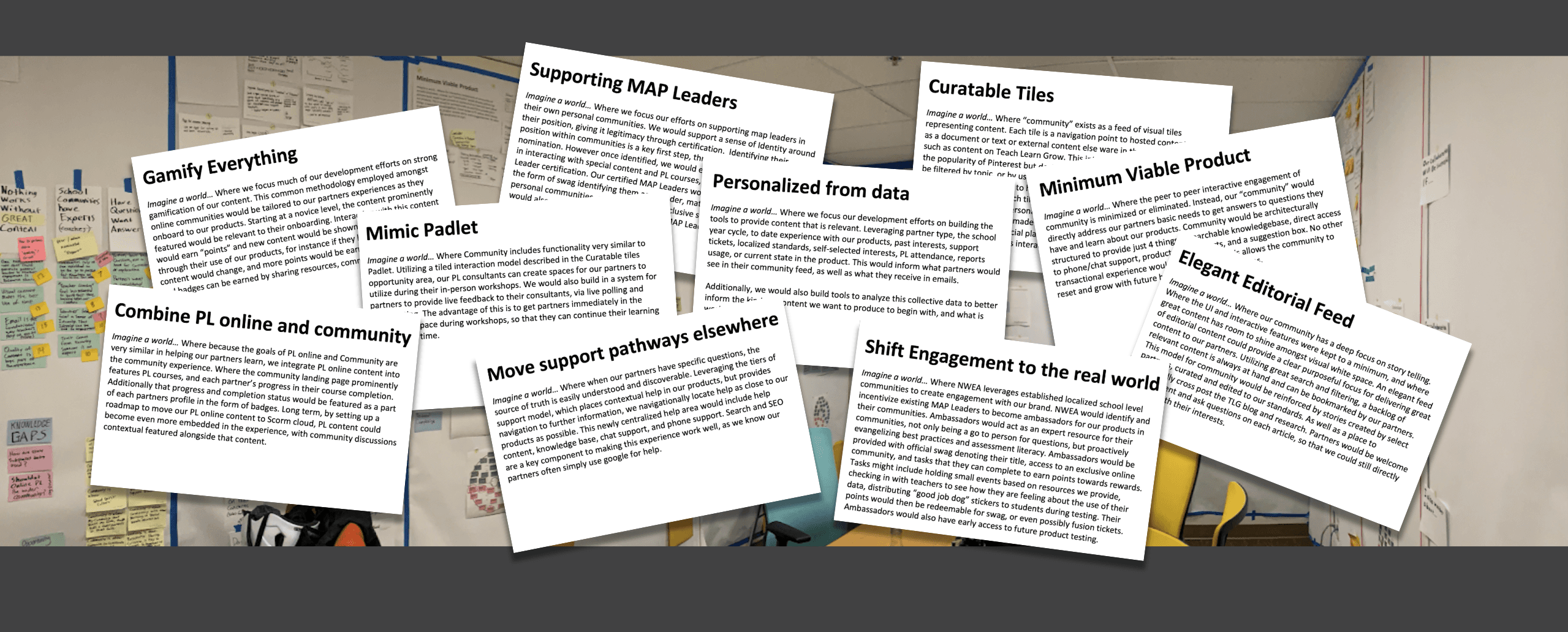
Opportunity areas
These insights mapped on to opportunity areas that we could begin to explore
Decisions
Armed with our learnings and insights, we proceeded to make decisions around what we would pursue. After meetings to discuss and plan, we decided on building a Minimum viable product. This seems obvious in retrospect, but at the time this come from one key learning:
**There is no evidence to support the need for a community with peer to peer engagement.**
Our products play a small part of educators professional lives, and we want to design community to accommodate the little time they have.We can reset community to focus on doing two things:
Provide seamless access to support
Host key communications
Minimum Viable Product
“Imagine a world… Where the peer to peer interactive engagement of community is minimized or eliminated.
Instead, our “community” would directly address our partners basic needs to get answers to questions they have and learn about our products. Community would be architecturally structured to provide just 4 things:
• A searchable knowledge base,
• Direct access to phone/chat support,
• Product communications,
• A suggestion box.
Design
With the value propositions of this product sorted, we continue work on the information architecture and the layout of the community as we prepare for platform migration. Happy to walk through the process of how we mapped out the value proposition, the specifics of the post research design process in person. Get in touch with me hey@vinucasper.com
Conclusion
The research phase of this project had a big impact of the direction this project took. Learning that we could position the community in a way that serves the people using it directly corresponds to its growth. NWEA connection continues to blossoms as resource hub for educators to this day.